
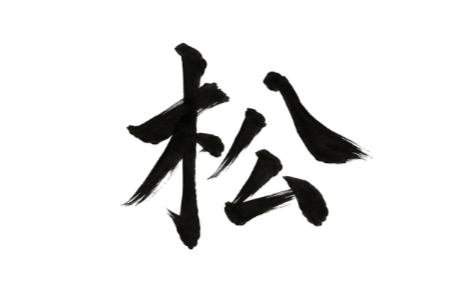
Sōng (松): Releasing What We Carry
There is an old saying in Chinese medicine: 气功能祛病,缘由在松静 (qìgōng néng qū bìng, yuányóu zài sōng jìng). Qigong can dispel illness, and the reason lies in sōng and jìng: releasing and quiescence. The same is true of tai chi. This month, across our four classes beginning Saturday, October 10, we focus on the first of the two.
Sōng is often translated as "relax," but relax may be understood as going limp. Sōng is closer to releasing: letting go of the effort we do not need while keeping the structure we do. In class we say it this way: releasing but not collapsing.

Thirty Years In, Still Finding More
I have been studying with Master Yang for about thirty years and have attended most of his summer taiji camps. The online classes add another option, and for me the best thing about the course is the ability to watch the class as many times as I want, any time, any place.
Our Body Can Heal: What Changes Is Not Always the Scan
When we say the body can heal, most of us picture the tissue changing back. The disc returns to its place. The narrowing opens. The scan looks different. We wait for that picture, and when it does not arrive we conclude that nothing is happening.
Rooted: The Foundation Beneath Everything We Do
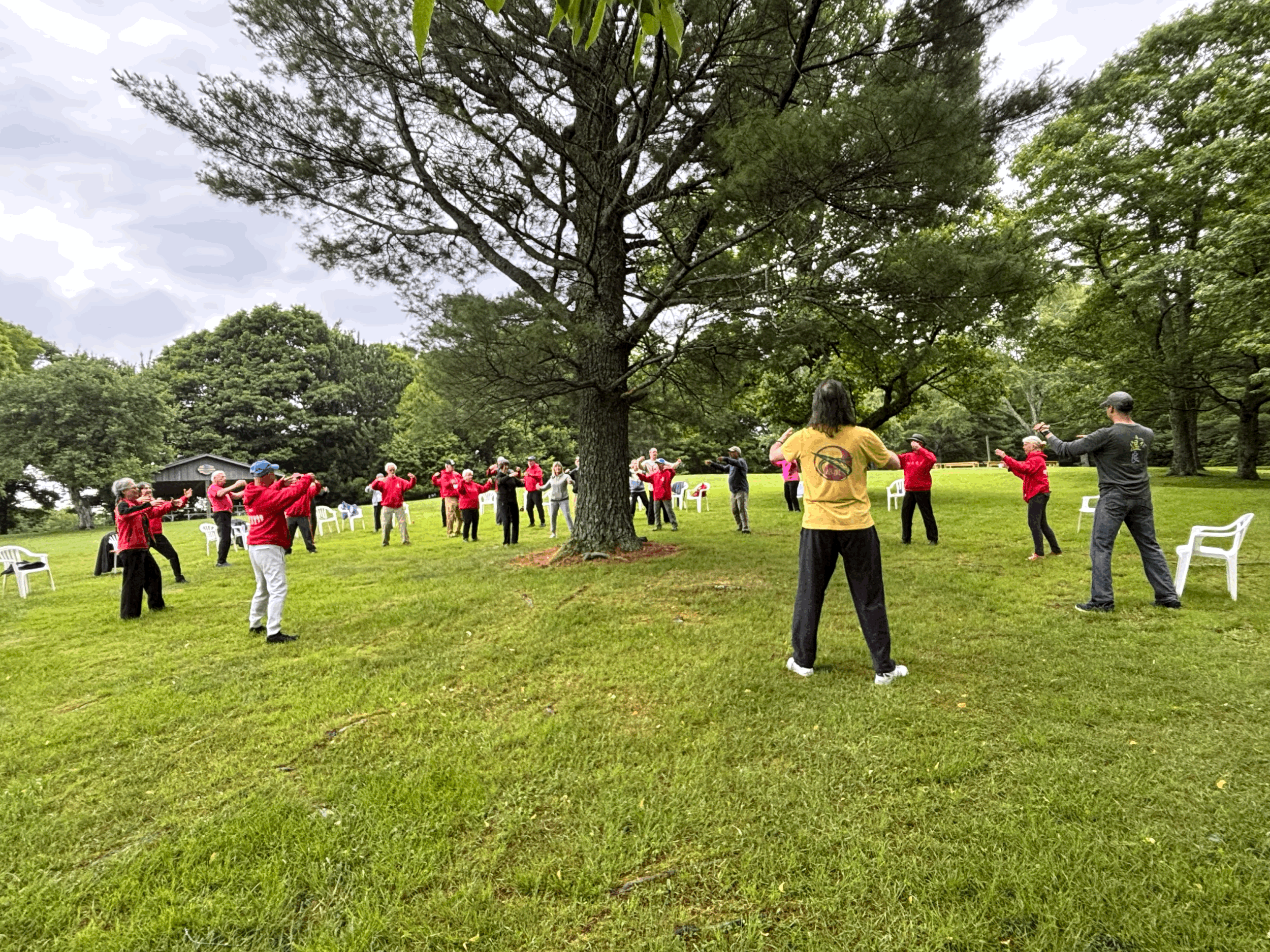
Every step begins the same way, with the feet, ankles, knees, and hips finding the ground. This is where balance lives, where falls and injuries are most often prevented, and where the body, over the years, either grows steadier or grows more uncertain.
For those living with back pain, this foundation carries extra weight, literally. An uneven stance, a tight ankle, a locked knee: these often surface later as strain higher up in the back, sometimes even disturbing sleep. Working at the root can ease what shows up higher in the chain.
Standing Tall: Understanding Posture and Kyphosis
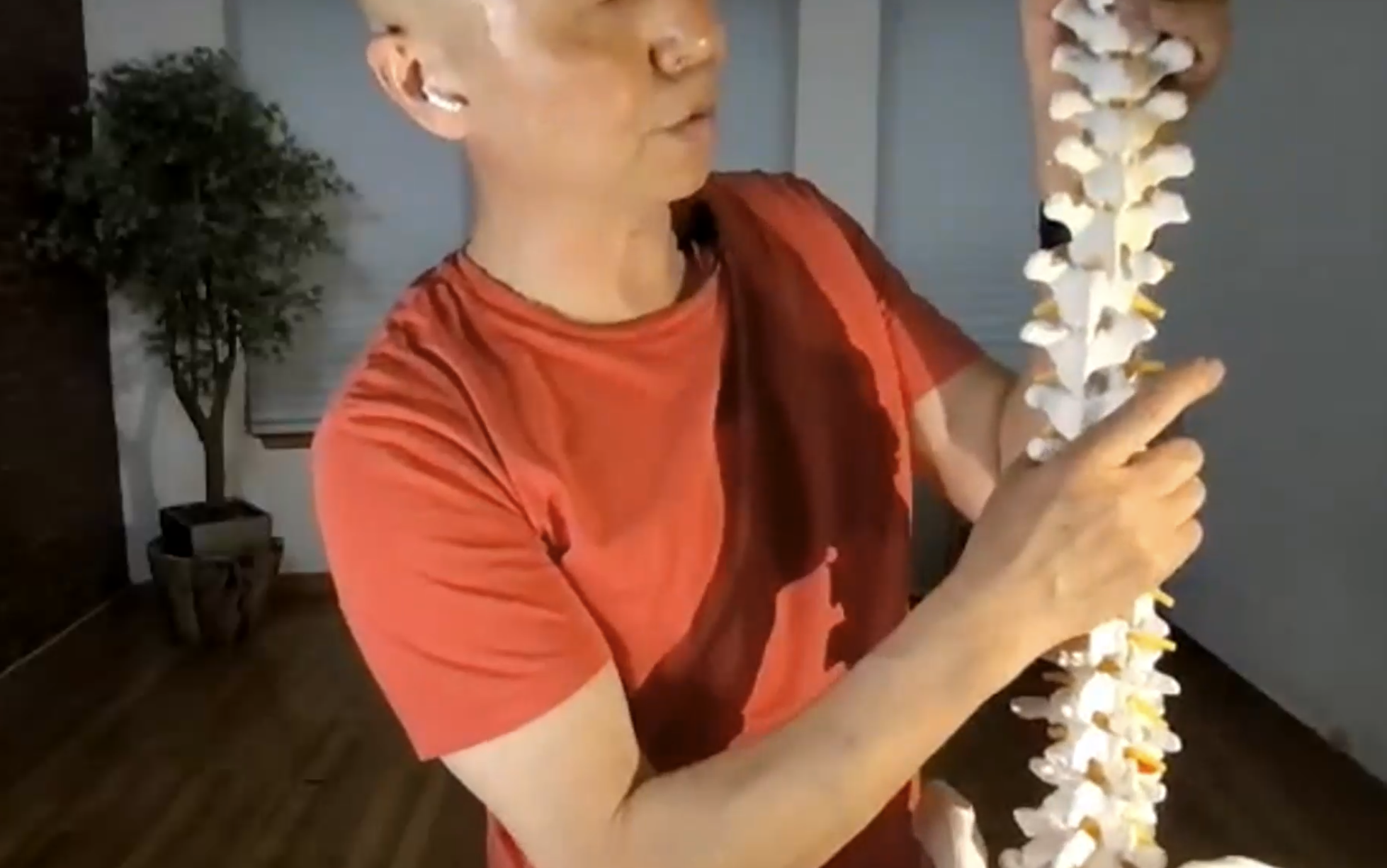
We were not built to fold forward all day. Yet that is how most of us now live — leaning toward a screen, the head drifting in front of the shoulders, the upper back slowly rounding. Over months and years, this quiet habit becomes the body’s default shape. We notice the result long before we notice the cause: a stiff neck, an aching low back, shallow breath, a heaviness we are quick to blame on age.
Far more often, the cause is posture. And posture, unlike age, is something we can influence — at any stage of life.
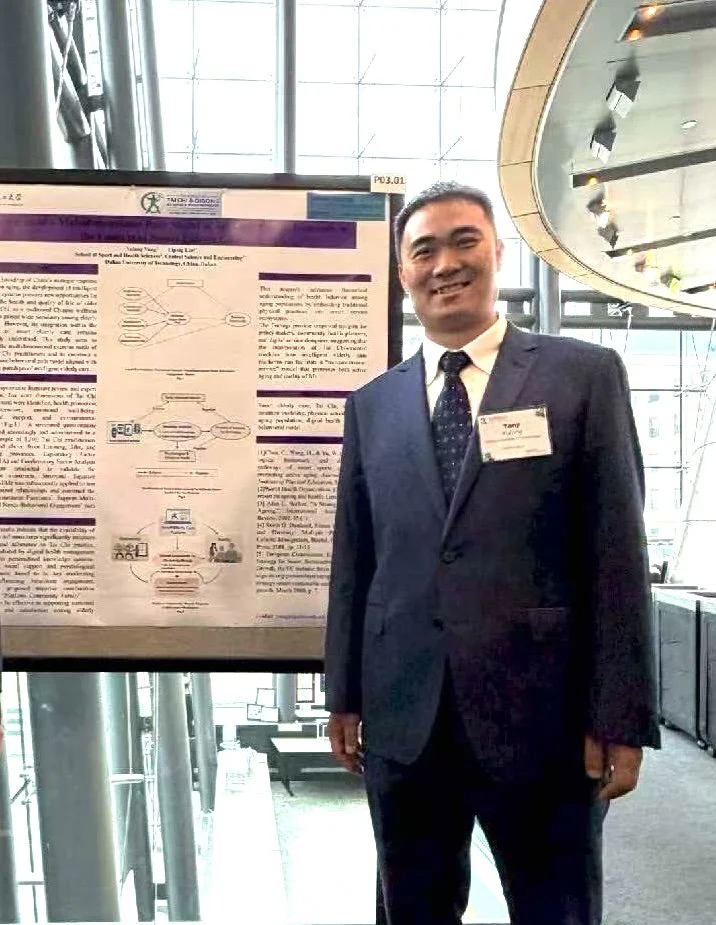
Reflections by Professor Yulong Yang
Professor Yulong Yang, who attended the Harvard session, shared a generous reflection on the experience — describing the approach as a “completely fresh perspective on the principles and therapeutic benefits of traditional Chinese Qigong and Tai Chi”; and “an elevation of traditional Chinese healing and martial arts philosophy within the context of modern civilization.”
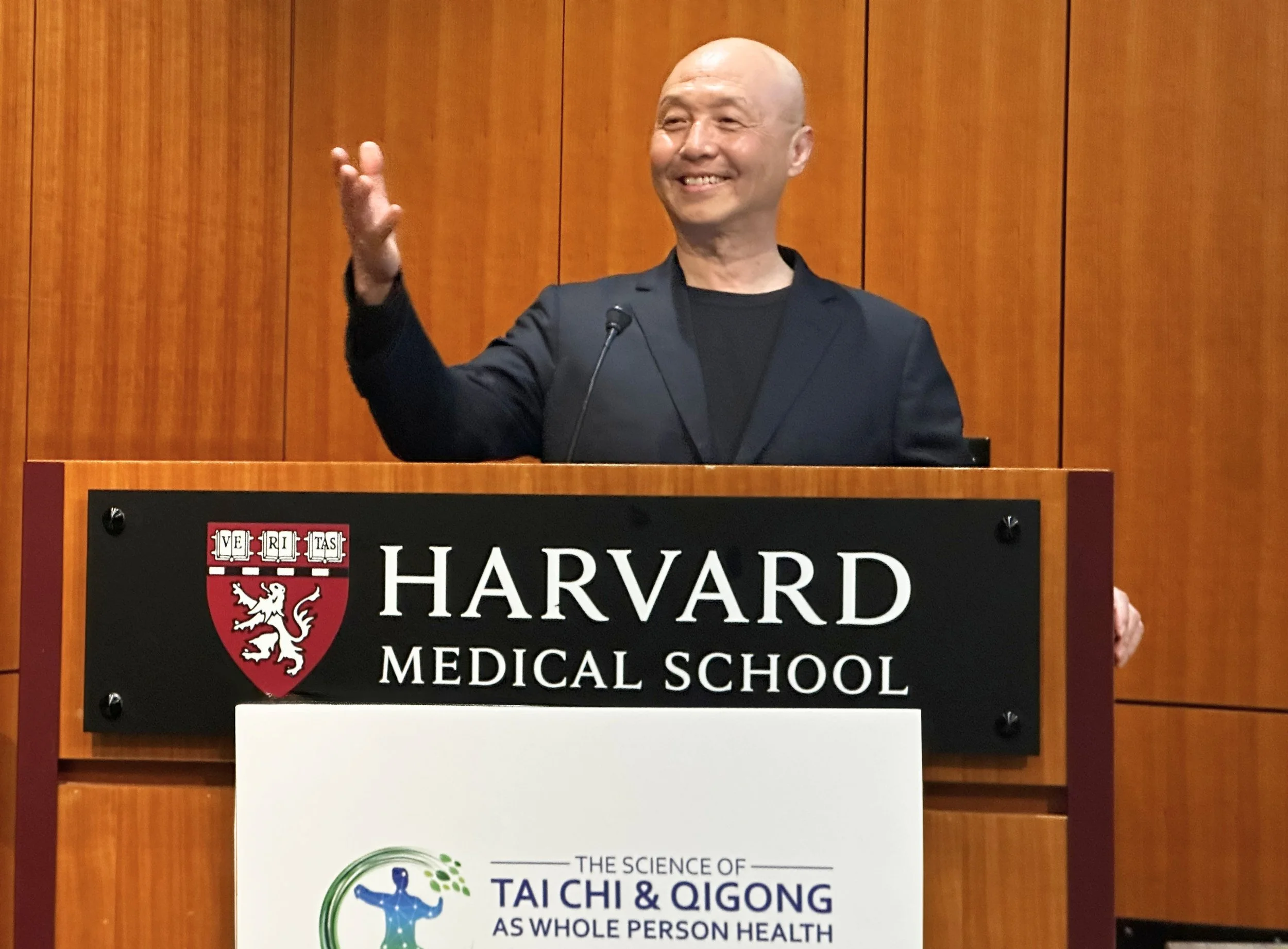
My reflections on the Harvard Medical School Conference
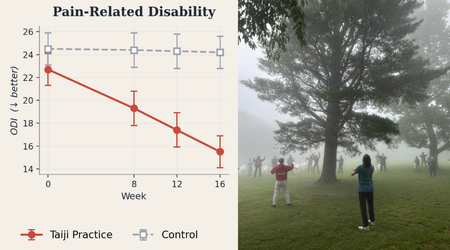
On April 30, our 2024 randomized controlled trial on virtually delivered Tai Chi, Qigong, and meditation for chronic low back pain — among the top-scoring submissions to the conference —was presented at The Science of Tai Chi and Qigong as Whole Person Health at Harvard Medical School. The trial, published in the North American Spine Society Journal, followed 350 adults across twelve weeks and demonstrated clinically and statistically significant improvement in pain-related disability, pain intensity, and overall quality of life, with statistically significant improvement in sleep quality.
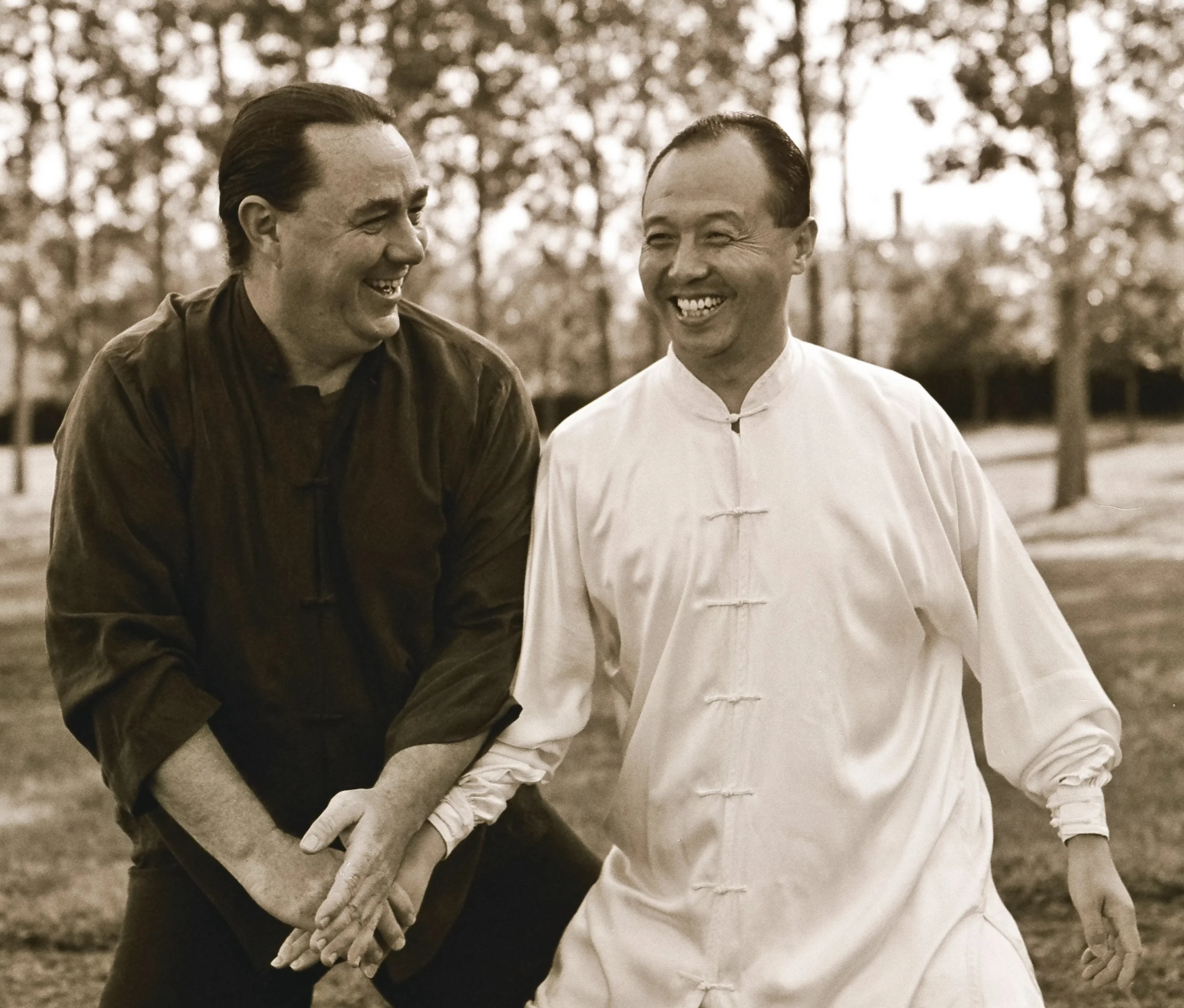
Push Hands: The Practice You Cannot Do Alone
And why that is exactly the point
There is a dimension of Tai Chi that solo practice cannot reach. Push Hands (推手) trains you to sense, absorb, and redirect a partner's force with minimum effort while maintaining your own center. Listening begins through contact and, with practice, grows into reading a partner's energy through subtle cues even before touch. At camp, practicing with partners of different levels and sizes, under close guidance, enhances what you have developed and teaches your body in ways solo training alone cannot accomplish.

松 — The Art of Release
How letting go unlocks healing
"Last week I walked 15,000 steps through Central Park. For a few days, I forgot I ever had pain." — WaQi spine class member and patient of Dr. Roger Härtl, Weill Cornell
At the root of healing is one principle: 松 sōng — release. Not collapsing, but a strong, naturally aligned skeleton with engaged but softened, relaxed muscles. Engage only what is necessary. Let go of the rest. When tension blocks flow: pain, poor sleep, and impaired balance often follow. 松 addresses all three at the root.
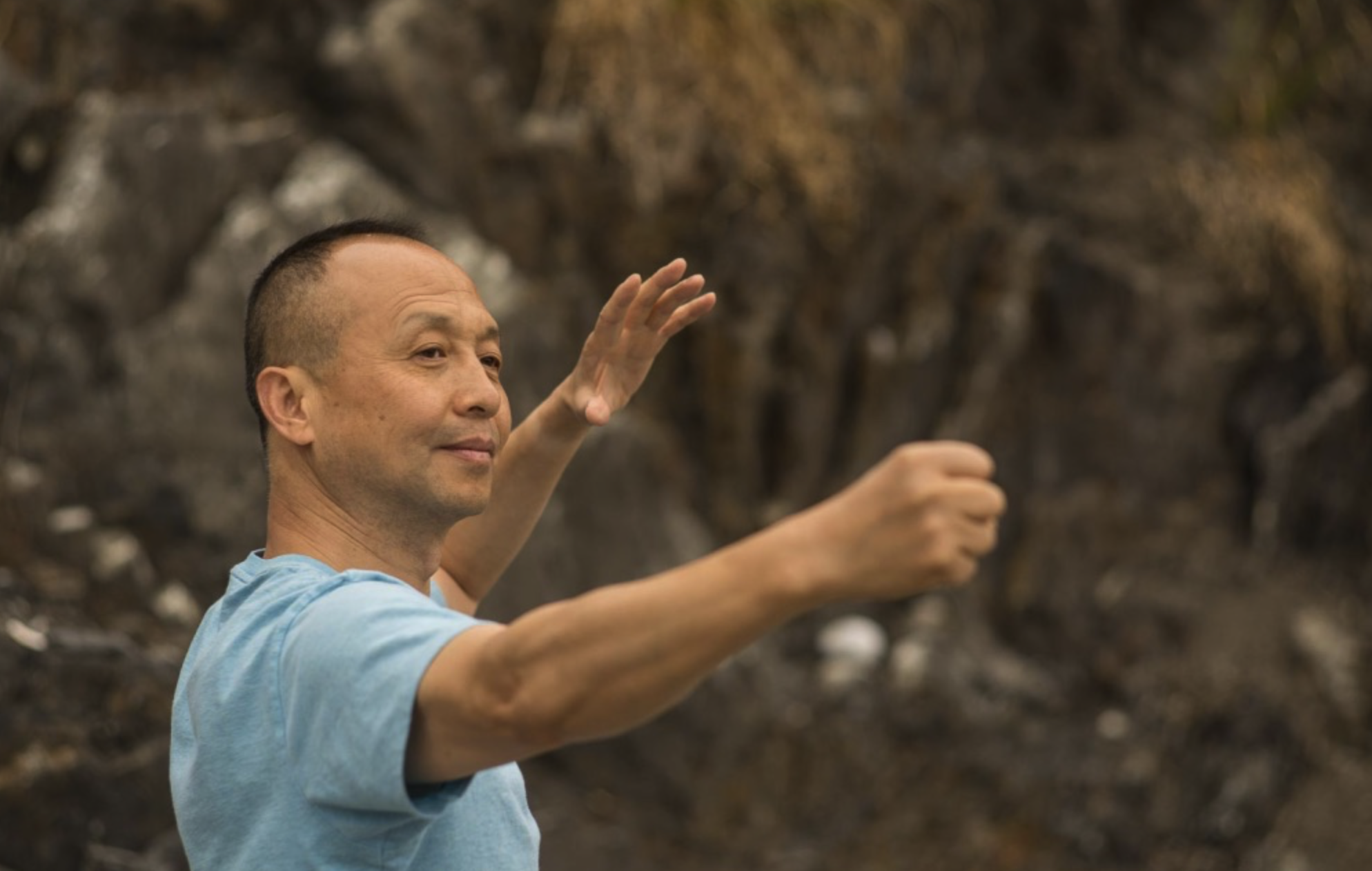
Four Ounces Can Move a Thousand Pounds
The art of minimum effort for maximum results
四两拨千斤 (Sì liǎng bō qiān jīn)
Tai Chi has a famous saying: “Four ounces can move a thousand pounds.” It sounds mysterious, even impossible—until you experience it.
This principle is not about being weak or passive. It is about efficiency: meeting a challenge with the right amount of effort, at the right time, in the right place. When your body is organized and your mind is clear, a small action can create a powerful result.
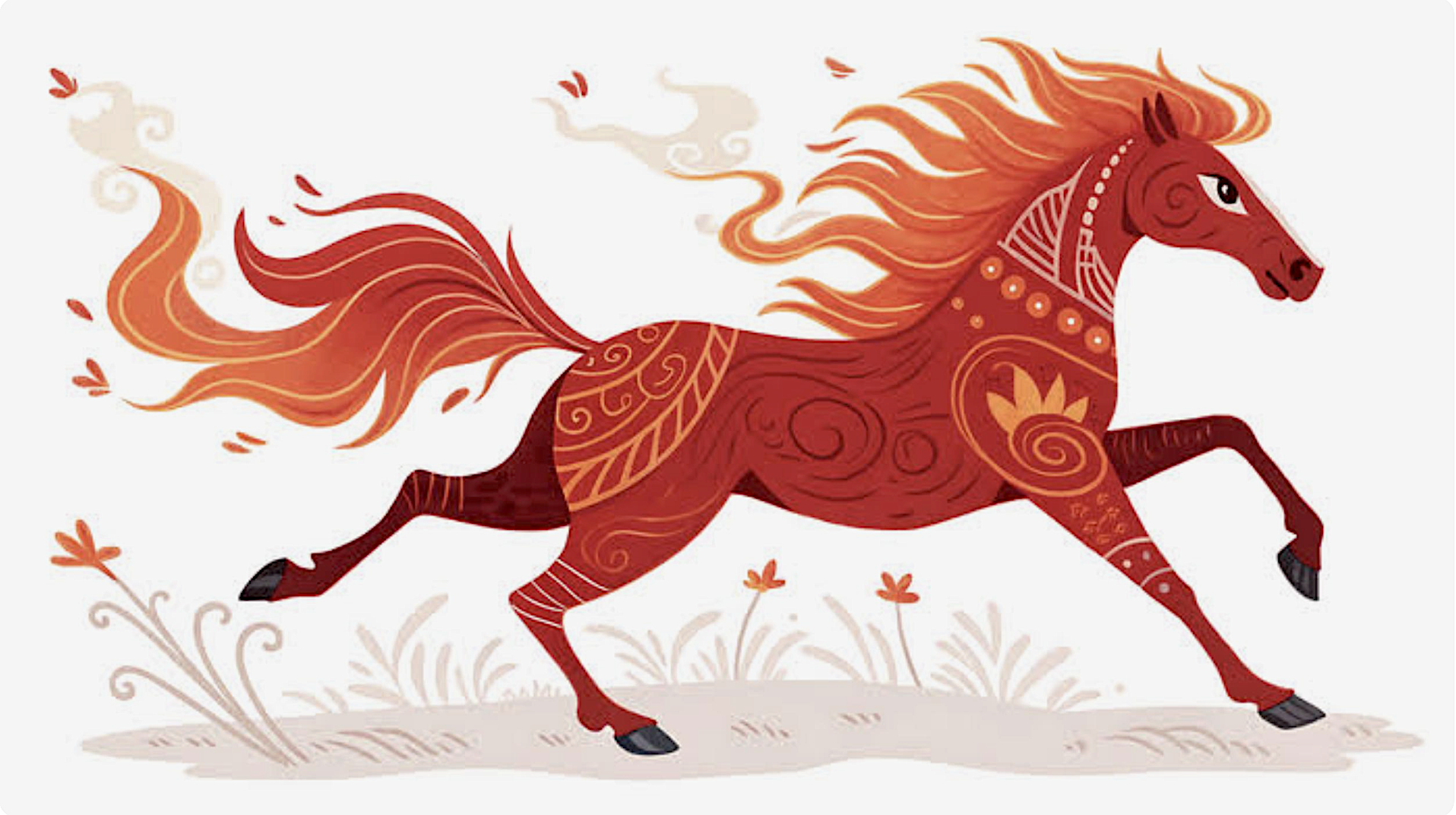
Chinese New Year Reflection
The Quiet Power of Doing Less
无为 (Wúwéi): Conserve Energy for Healing and Well-Being
Chinese New Year, the Year of the Horse, invites a reset. Each year, many of us respond to a new beginning by adding more—new goals, new plans, new commitments. This year, however, we might begin differently. Instead of adding, we reduce what is unnecessary.

How to Relieve Pain—and Stay Pain Free—During Cold Weather
Chinese Grandmother Wisdom for Protecting Qi in Winter
When cold weather arrives, many people notice their back pain returning—or worsening. This is not a coincidence.
In Chinese medicine, there is a well-known principle: “Cold causes contraction; contraction causes pain.” (寒则凝,凝则痛)

The Danger and Power of Compounding
Small Neglect vs. Small Daily Practice
We often think of health as something we lose suddenly—after an illness, an injury, or a major life event. What I’ve learned in recent years is more subtle, and more unsettling:

Tai Chi, Core Strength, and Back Pain Relief
December’s theme in our back pain class is core strength—a vital key to both relieving and preventing pain. In our 2024 study, participants in our Tai Chi–based program saw significant improvements in pain, disability, sleep, and quality of life. A major reason for the study’s success was the deep, functional training rooted in traditional Tai Chi and Qigong.

The Art of Balance & Pain Relief
This November, we're exploring how balance and back pain are deeply connected—and how Tai Chi and Qigong can address both simultaneously.

Balance you need in your recovery
Thank you for reading Grandmaster Yang’s blog at https://www.waqi.health.

No pain. More gain.
Thank you for reading Grandmaster Yang’s blog at https://www.waqi.health.

“No Pain, More Gain” Can Be a Game Changer
Thank you for reading Grandmaster Yang’s blog at https://www.waqi.health.

The importance of rest
Thank you for reading Grandmaster Yang’s blog at https://www.waqi.health.