
By Master Yang Yang, PhD
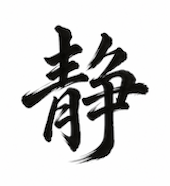
In last month's letter we worked with 松 (sōng), releasing what the body does not need to hold. This month we turn to 静 (jìng), stillness. It is worth saying plainly what stillness is not. It is not silence. It is not an empty mind. It is not lying down and waiting.
Stillness shows up in three places.
In the body, as settling. The shoulders come down. The breath stops being managed. The back stops bracing for a movement that has not happened yet.
In the mind, as quiet. Less rehearsal of the next painful moment, less argument with the body about what it did yesterday.
In the attention, as noticing. This is the one that changes things. When the first two are present, you begin to feel tension while it is still small, before it has become pain. That early noticing is the most useful skill we teach, and it is only available to a quiet mind.
万物静中得 (wàn wù jìng zhōng dé): all things are gained in stillness. You can see it outside the window. Seeds open underground, in the dark, unwatched. A tree puts down roots before it goes up. Muddy water does not become clear by being stirred. It becomes clear by being left alone. The body does most of its repair during sleep, when we have stopped asking anything of it.
This is the hard part for someone in pain, because every instinct says to do something. But not all progress comes from doing more. Some of it comes from stopping the fight.
A practice, if you want one this week.
Sit comfortably, or lie down. Do nothing for two minutes. That is the whole instruction, and it is harder than it sounds. Notice what the body does when it is asked to do nothing: where it still holds, where it braces, what it is guarding against. You are not fixing any of it. Noticing is the practice. Then, on each out-breath, let one of those places soften a little. One place, a little. Stop before you are tired of it.
Two honest notes. Stillness does not repair a disc or cure a structural problem, and it does not work for everyone. And stillness is not rest. Healing also needs movement, gradually, toward the things that have become frightening.
不静不见动之奇 (bù jìng bù jiàn dòng zhī qí): without stillness, we do not see the wonder of movement. We will come to the movement.
With warm regards,
Yang
Read the full November newsletter here
Browse our newsletter archive here
If you would like to explore these principles in a guided setting, you are welcome to join our weekly classes or in-person training programs.
Explore our Live Online Saturday Spine Class (Fundamentals) → https://waqi.health/chronic-pain-relief
Explore our Live Online Sunday Cannon Fist Class → https://wa-qi.com/fall-2026-cannon-fist-sign-up
